
The Spiration Valve, a revolutionary device can help severe emphysema patients who consistently feel short of breath despite using COPD medications and/or oxygen.
Patients report being able to take full breaths immediately after the procedure and within a few days are back to doing everyday tasks with ease. In clinical studies patients treated with Endobronchial Valves have been shown to:
- Breathe easier
- Be more active and energetic
- Be less short of breath
- Enjoy a significantly improved quality of life compared to untreated patients*
*24-MONTH FOLLOW-UP of EMPROVE. Ann Am Thorac Soc. 2024;21(2):251–260. doi:10.1513/AnnalsATS.202306-520OC
What is the spiration Valve?
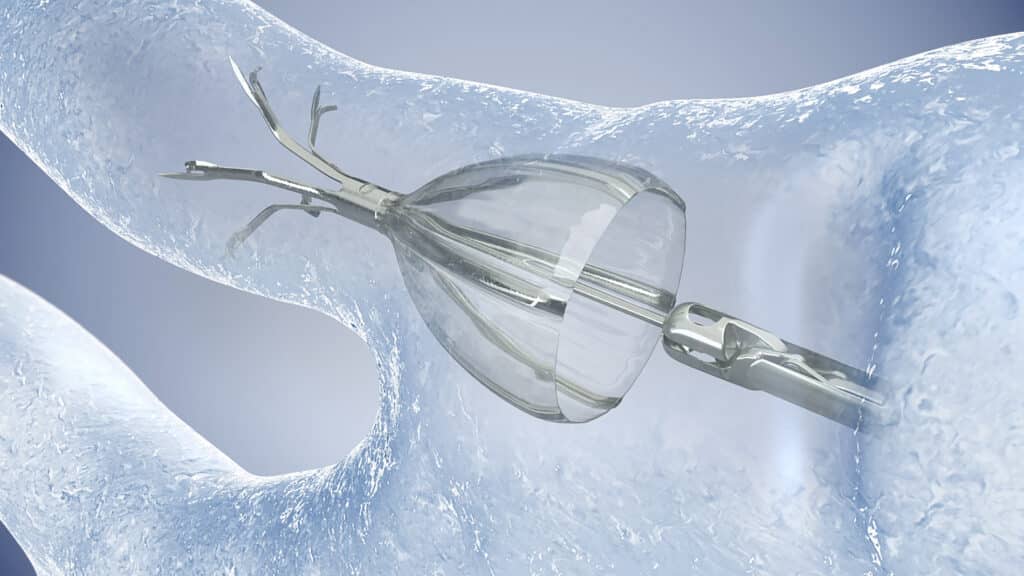
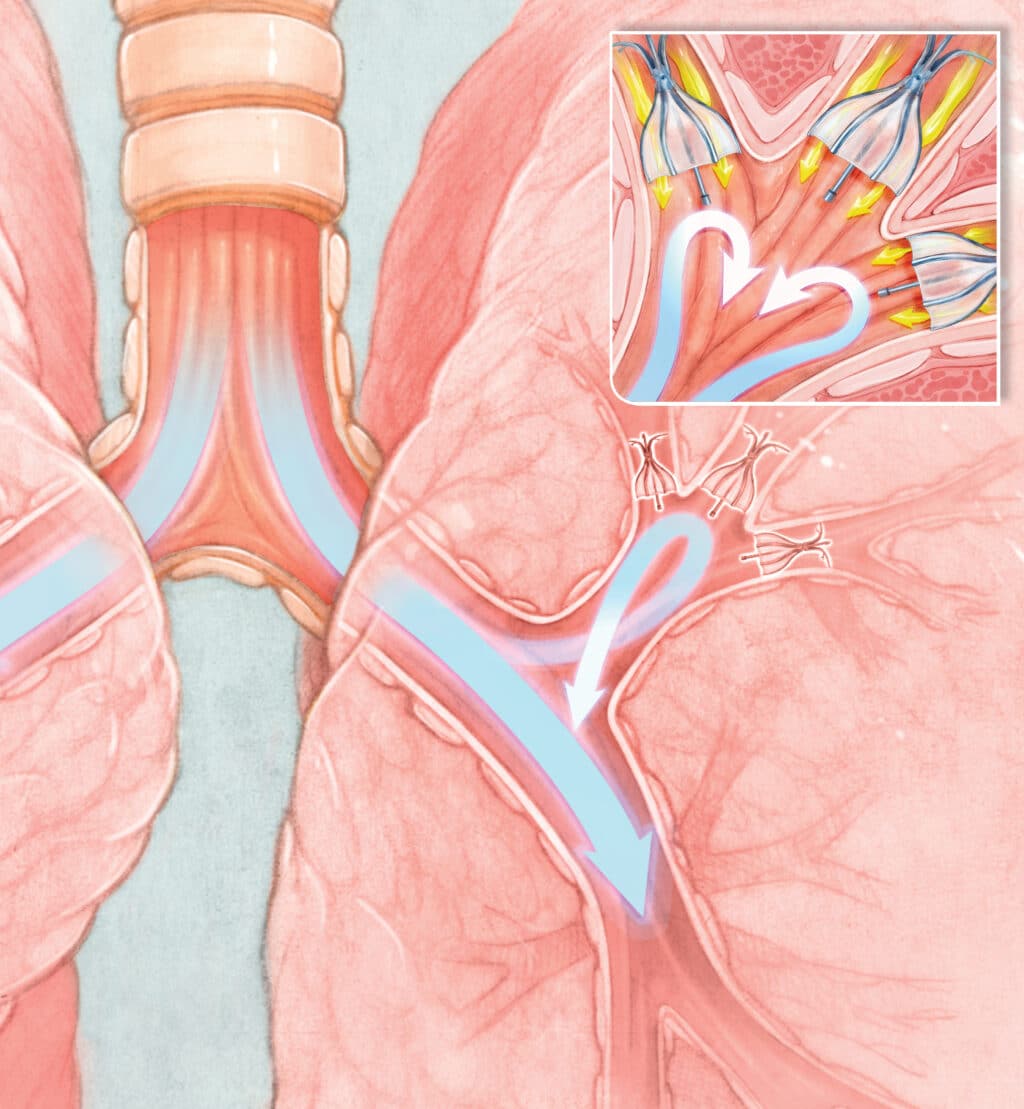
Endobronchial valve therapy with the Spiration® Valve System offers a new, minimally-invasive treatment option for severe emphysema patients. The Spiration Valve is an umbrella-shaped device that is placed in targeted airways of the lung during a short bronchoscopic procedure. Once in place, the Spiration Valve redirects air from diseased parts of the lung to healthier parts, allowing the healthier lung tissue to expand and function more effectively. With a potential reduction in lung volume, a patient may be able to breathe more easily and experience improvement in their quality of life.
How does the Procedure Work?
The Spiration Valve System includes an umbrella-shaped device that is placed in targeted airways of the lung during a short bronchoscopic procedure. Once in place, the device redirects air from diseased parts of the lung to healthier parts, allowing the healthier lung tissue to expand and function more effectively. With a potential reduction in lung volume, a patient may be able to breathe more easily and experience improvement in their quality of life.
What can Patients Expect?
A typical Endobronchial valve procedure looks like this:
- The doctor will give you medicine to make you sleepy.
- A small tube with a camera, called a bronchoscope, will be inserted into your lungs through your nose or mouth.
- During the procedure on average the doctor will place 4 valves in the airways.
- You will stay in the hospital for approximately 3 nights for observation.
- After the procedure, you will continue to use the medicines that your doctor has prescribed for your condition.